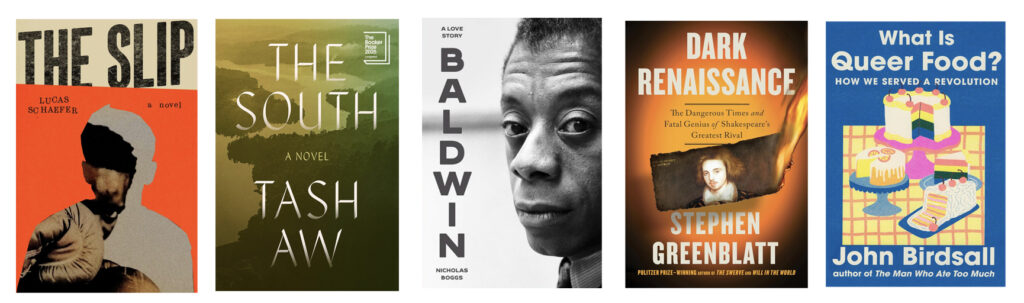
The Booker Prize recently announced its shortlist. Among the 6 titles are Douglas Stuart’s John of Johnand Marlon James’ The Disappearers, two gay novels published this year. They are both very good. Of The Disappearers, The New York Times critic Dwight Garner said that “James has written a masterpiece, the novel of the decade and possibly of the century thus far.” He compares it with Faulkner’s Absalom, Absalom, “the greatest American novel”. It even gets the favor of Bret Stephens in a humorous piece The Literary World’s D.E.I. Checklist that criticizes national literary prizes in the US for focusing too much on minority themes and writers. The Disappearers is one of the books he mentions among the long list for fiction of National Book Foundation. Then he adds: “One needn’t get into an argument about the quality of many of these works — at least a few of which, like James’s “The Disappearers,” are first-rate works of literature.”
Let’s wait for the winner announcement on November 9th. To me The Disappearers and John of Johnalready qualify as best books of 2026.
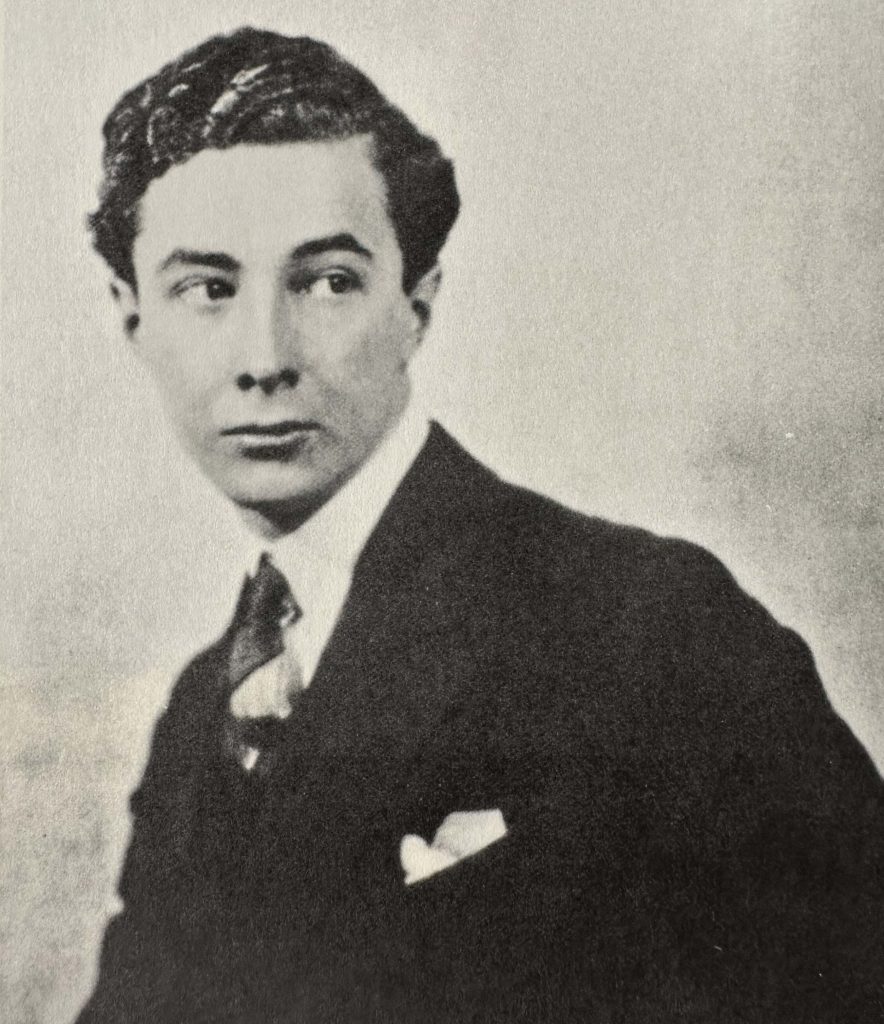
Two men played a major role in Somerset Maugham’s life: Gerald Haxton until his death in 1944, and then Alan Searle.
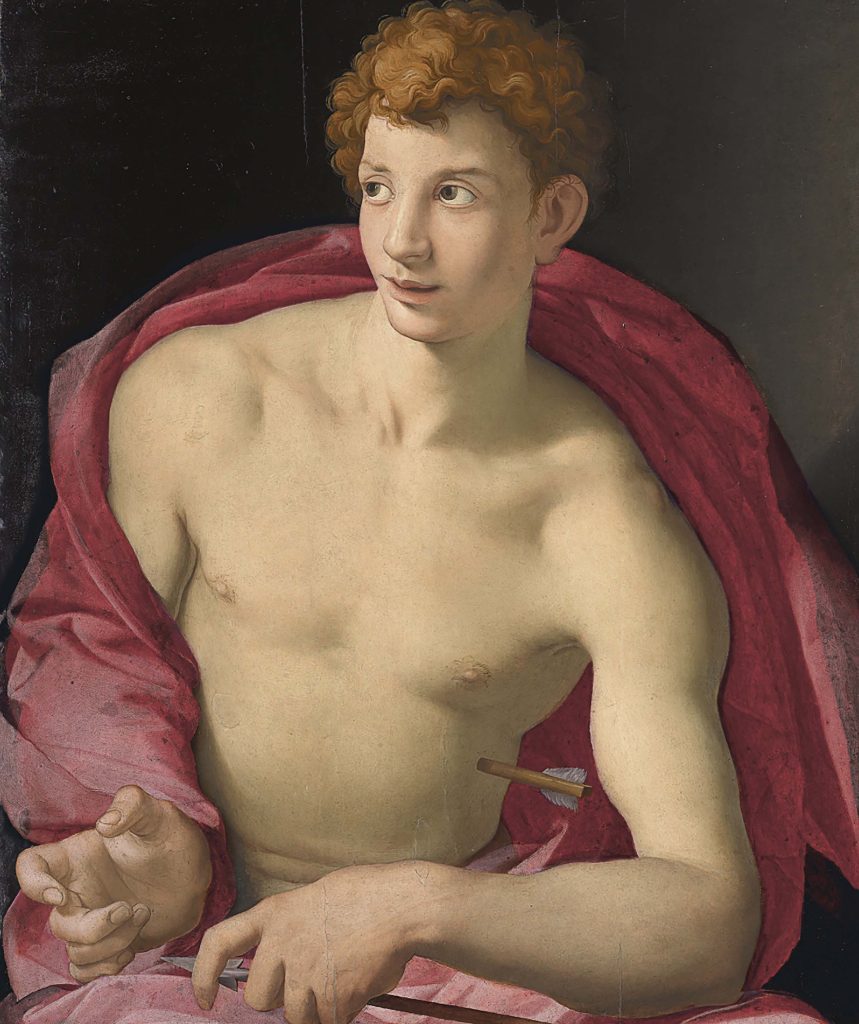
Alan Searle, the Bronzino Boy
In her biography of Somerset Maugham (The Secret Lives of Somerset Maugham, Random House, 2010), whose publication William Boyd enthusiastically welcomed in The Guardian, Selina Hastings reprises an earlier biographer’s (Maugham: A Biography, Ted Morgan, Simon & Schuster, 1980) remark about Alan Searle when he met Maugham in 1928. Lytton Strachey used to call him his “Bronzino Boy.”
Portrait of a young Man as Saint Sebastian Bronzino, ca. 1533, Museo Nacional Thyssen-Bornemisza, Madrid
When they met again in the United States after the war, five years after they had last seen each other, Maugham said to him: “You may have looked like a Bronzino once, but now you look like a depraved Frans Hals,” Glenway Wescott recalled.
Rereading this biography makes me want to read The Narrow Corner and Christmas Holiday:
Christmas Holiday is first and foremost a political allegory, in which the author employs his characters to illustrate the ideological struggles in Europe, using them to personify the nature of Fascism and the totalitarian states, and the fatal malleability of the op-pressed. Unfortunately, they are all, with the exception of Charley, two-dimensional, and the lengthy relating of their various stories at secondhand grows monotonous. The only human aspect of Simon, carefully left unexplored by the author, is a strong impression that he is and always has been hopelessly in love with handsome, heterosexual Charley (thus refuting Gore Vidal’s assertion that The Narrow Corner is Maugham’s only “crypto-fag” novel).
Posted inUncategorized|Comments Off on Somerset Maugham and his Bronzino Boy
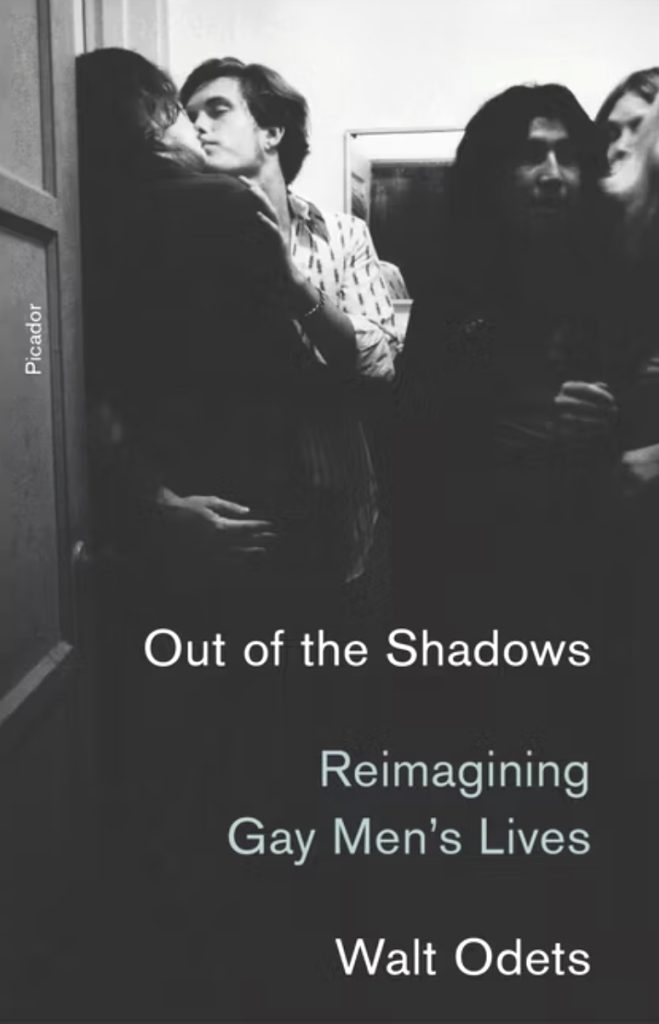
From The New York Times: “Walt Odets, a psychologist whose work with gay men in the Bay Area at the height of the AIDS epidemic led him to write a book on a nearly taboo topic, the survivor’s guilt and depression experienced by men who were not infected with H.I.V., died on July 5 at his home in Berkeley, Calif. He was 79.” (Walt Odets, Who Delved Into the Minds of Gay Men, Dies at 79)
Here, his writing is poignant and achingly beautiful — so much so, in fact, that I occasionally had to put the book down to avoid weeping on the subway. There’s sadness in Odets’s life story, but there’s mostly resilience, tenderness and a willingness to fashion an unapologetic gay life, sometimes against all odds. (The exquisitely told story of Odets’s longtime friend and lover, who fled a trailer he shared with a brutally homophobic family and built a life bursting with meaning and intimacy, is the most compelling story of gay self-actualization I’ve ever encountered.)
Posted inQueer Lives|Comments Off on Queer Lives : Walt Odets, 1947-2026
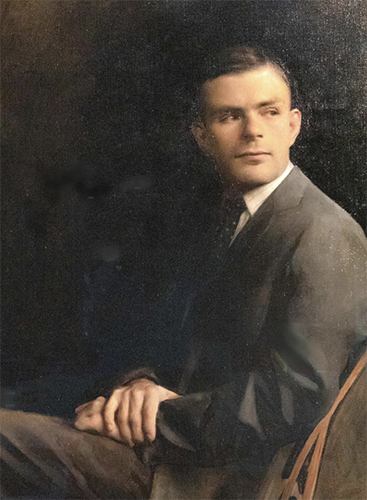
In December 1951, Alan Turing had just completed his groundbreaking work on morphogenesis, which would be published the following year. Deciding he deserved a reward, he picked up a young man on the streets of Manchester and brought him home. The young man, Arnold Murray, later confided in a friend, who burglarized Turing’s house. Turing reported the burglary to the police. By then, the burglar had been arrested in connection with another offense and implicated both Arnold Murray and Turing. When the two men appeared in court in March 1952 on charges of “gross indecency,” they were convicted. Turing agreed to undergo hormone treatment, sparing him a prison sentence.
Alan Turing, posthumous portrait, Joron Sokol, 2019, Lewis Library atrium at Princeton University
Earlier that year, Turing had written to his friend Norman Routledge:
I’ve now got myself into the kind of trouble that I have always considered quite a possibility for me, though I have usually rated it at about 10:1 against. I shall shortly be pleading guilty to a charge of sexual offenses with a young man. The story of how it all came to be found out is a long and fascinating one, which I shall have to make into a short story one day, but haven’t time to tell you now. No doubt I shall emerge from it all a different man, but quite who I’ve not found out.
But now it was time for lunch, and Alec was walking towards the University but looking out for a reasonably good restaurant. Alec had been working rather hard until two or three weeks before. It was about interplanetary travel. Alec had always been rather keen on such crackpot problems, but although he rather liked to let himself go rather wildly to newspaper men or on the Third programme when he got the chance, when he wrote for technically learned readers his work was quite sound, or had been when he was younger. This last paper was real good stuff: better than he’d done since his mid twenties when he had introduced the idea which is now commonly known as “Pryce’s buoy”. Alec always felt a glow of pride when this phrase was used. The rather obvious double-entendre rather pleased him too. He always liked to parade his homosexuality, and in suitable company Alec would pretend that the word was spelt without the ‘u’. It was quite some time now since he had ‘had’ anyone, in fact not since he had met that soldier in Paris last summer. Now that his paper was finished he might justifiably consider that he had earned another young man, and he knew where he might find one who might be suitable.
Posted inUncategorized|TaggedAlan Turing|Comments Off on Alan Turing’s Lost Autofiction: The Short Story Behind His Conviction
His achievements on the court were eclipsed by an essay he wrote in Sports Illustrated in 2013 in which he declared: “I’m a 34-year-old N.B.A. center. I’m Black and I’m gay.”
In an essay for ESPN in which he revealed his glioblastoma diagnosis, Collins recalled his announcement from more than a decade earlier. “I got to tell my own story, the way I wanted to. And now I can honestly say, the past 12 years since have been the best of my life,” he wrote. “Your life is so much better when you just show up as your true self, unafraid to be your true self, in public or private.”
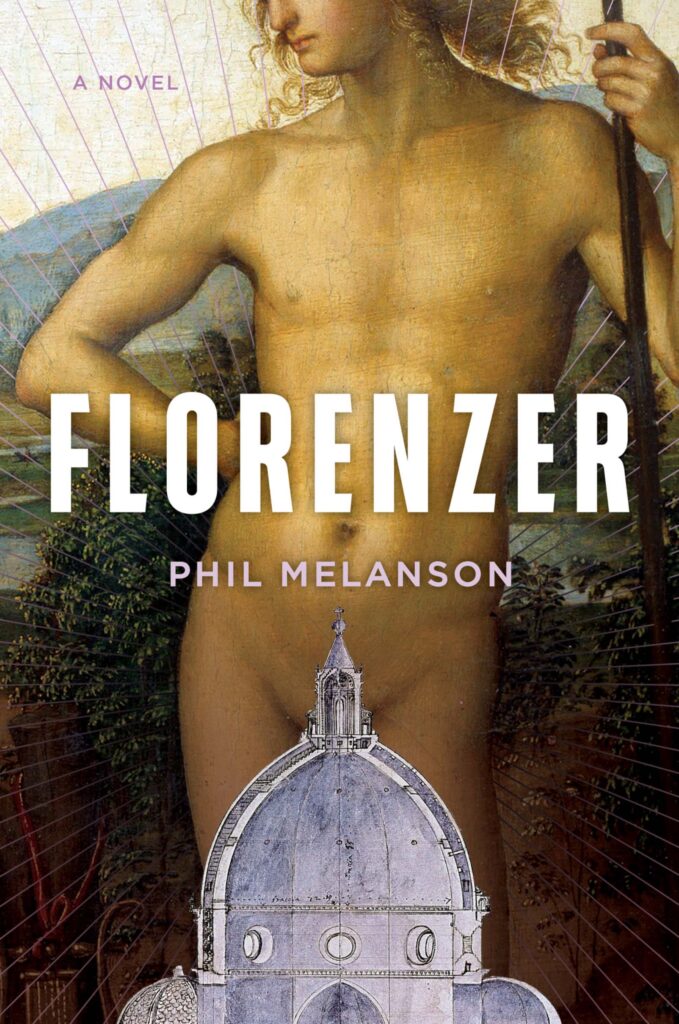
Florenzer by Phil Melanson (Liveright, 2025) is a historical novel about the youth of Leonardo da Vinci that explores his awakening to sexuality and his formative artistic years. It ends at the moment when Leonardo leaves Florence in 1482, leaving unfinished Adoration of the Magi, which had failed to please his patrons. The reader is left wanting more and eager to learn further.
The splendid biography dedicated to him by Charles Nicholl (Leonardo da Vinci: Flights of the Mind, Viking Penguin, 2004), which I suspect Phil Melanson may have drawn inspiration from, is the perfect complement.
Charles Nicholl skillfully combines analysis of the artworks with a biographical narrative, without overlooking the homosexual aspects of Leonardo’s life:
It is now widely accepted that Leonardo was homosexual. At least one of his early biographers, Giovanni Paolo Lomazzo, is explicit on the subject: in his Sogni e raggiona-menti of c. I564 he imagines the following dialogue between Leonardo and Phidias, the great sculptor of antiquity. Phidias asks Leonardo about one of his ‘favourite pupils’:
Phidias: Did you ever play with him that ‘backside game’ which Florentines love so much?
Leonardo: Many times. You should know that he was a very fair young man, especially around the age of fifteen.
P: And are you not ashamed to say so?
L: No! Why should I be ashamed? Among men of worth there is scarcely greater cause for pride.
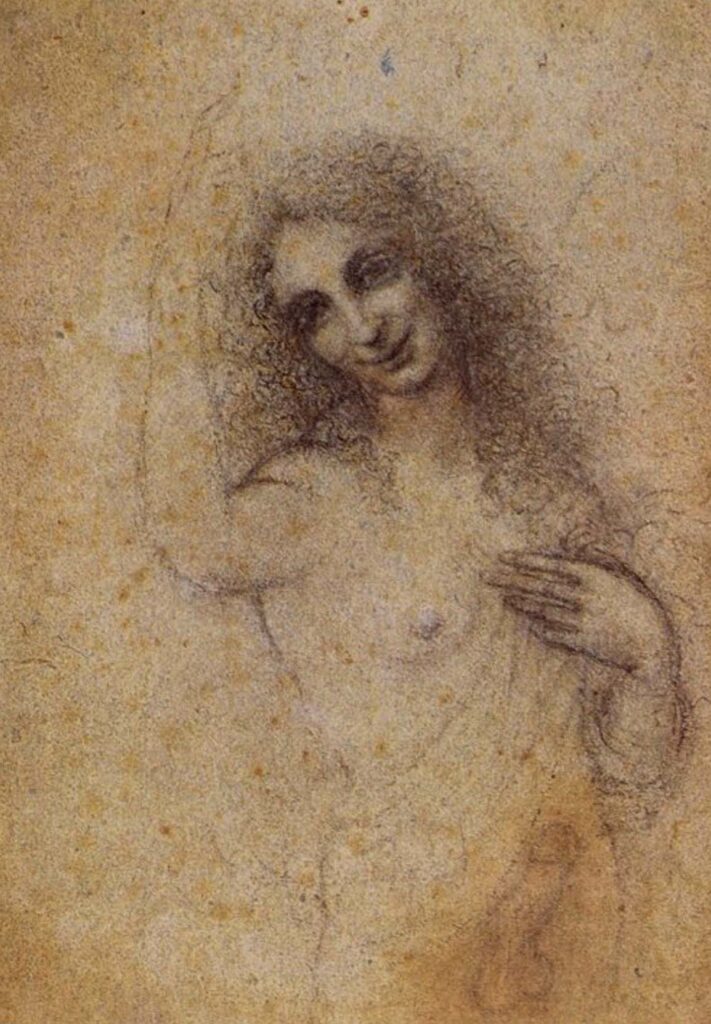
Lomazzo is particularly referring to Leonardo’s relationship with his Milanese pupil Giacomo Caprotti, known as ‘Salai’. Vasari is more discreet, but his description of Salai probably trails the same idea: ‘He was extraordinarily beautiful and comely, with lovely curling hair which Leonardo adored’. The adjective Vasari uses – vago: comely, pretty, charming – probably contains an overtone of effeminacy. Other young men flit into view in contexts suggestive of homosexuality – an apprentice called Paolo; a young man called Fioravanti: we shall meet these later. And while the preponderance of male nudes in Leonardo’s sketchbooks is conventional, some of his drawings are frankly homoerotic. The obvious instance is the so-called Angelo incarnato, with its full-frontal erection. This drawing is in turn related to the Louvre St John, probably his last painting: a meltingly poetic study of an androgynous-looking young man, with the cascading curls which he ‘adored’ in Salai, and which are a constant in his work from the first studio paintings of the early 1470s.
Leonardo: Angelo incarnato
What did it mean to be gay in Quattrocento Florence? Predictably, the answer is complex and ambiguous. On the one hand, homosexuality was widespread, as is suggested by Lomazzo’s dialogue, where the ‘backside game of sodomy’ is particularly associated with Florence; the Germans went as far as to use the word Florenzer (Florentine) to mean a sodomite. In Medici circles, homosexuality was openly tolerated: the sculptor Donatello, the poet Poliziano, the banker Filippo Strozi were all known to be gay. Botticelli was reputed to be, and like Leonardo he was the subject of an anonymous denuncia; and among later gay artists there were Michelangelo and Benvenuto Cellini. The latter was apparently omnivorous: he recounts his heterosexual conquests with gusto in his autobiography, but it is a fact that in 1523 he was fined by the florentine magistrates for ‘obscene acts’ with one Giovanni Rigogli. Accused by the sculptor Bandinelli of being a ‘filthy sodomite’, Cellini replied with a flourish, ‘I wish to God that I knew how to exercise such a noble art, for we read that Jupiter practised it with Ganymede in paradise, while here on earth it is practised by the greatest emperors and kings.’ This catches, if ironically, the same idea which Lomazzo gives to Leonardo in his dialogue: that homosexuality is a ‘cause for pride’ among ‘men of worth’.
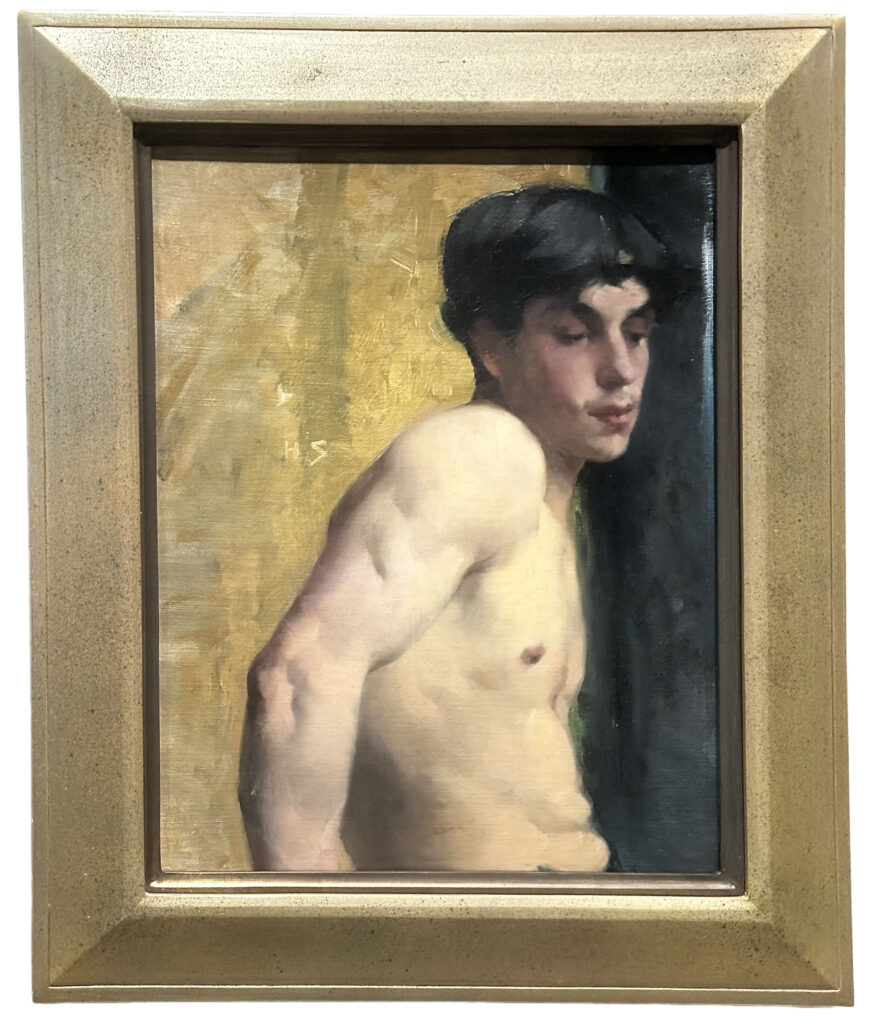
Youth, Helene Schjerfbeck, 1882, Gösta Serlachius Fine Arts Foundation, Mänttä
Exceptional exhibition currently on view at the Metropolitan Museum of Art in New York, running through April 5, 2026: Seeing Silence: The Paintings of Helene Schjerfbeck.
This remarkable show offers a rare opportunity to discover one of Finland’s most compelling yet internationally underrecognized artists.
Reading the latest issue of The Gay & Lesbian Review, I stumbled on an article arguing that The Count of Monte Cristo is threaded through with sapphic text and subtext in regard to the relationship between Eugénie Danglars and her piano teacher, Louise d’Armilly. Eugénie rejects marriage, despises men, dreams of artistic freedom, and ultimately chooses to run away with another woman. Still, I had totally missed it…
The same article goes further into Alexandre Dumas’ broader work:
Forbidden love is a recurring theme in Dumas’ works. The Three Musketeers and its sequels delve into it a great deal. Themes of gay love also appear: La Dame de Monsoreau is rife with them. Protagonist Count de Bussy and side character François duc d’Anjou are implied to be in a relationship, as are King Henri III and the court jester, Chicot. Sodomy had been decriminalized in France in 1791 but remained stigmatized at the time, and accusations of queerness were used to smear political opponents. It remained persecuted through laws against “indecency” and “corruption,” although its enforcement varied by time and place.
Again I totally missed it when I read La Dame de Monsoreau in my teens.
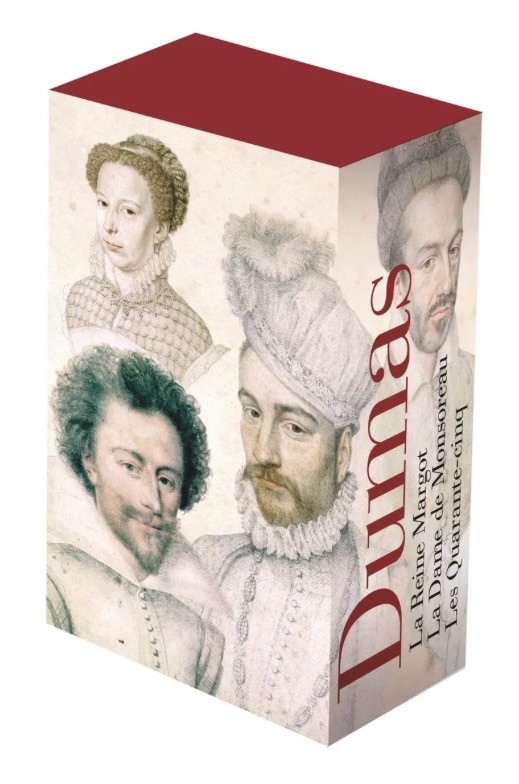
The timing of this discovery is perfect. This year’s Bibliothèque de la Pléiade album is dedicated to Dumas, and the Valois cycle is being republished this May. This is going to be my summer reading. Nothing else needed!
The Hairdreser’s Son, Gerbrand Bakker, translated from the Dutch by David Colmer, Archipelago Books: tension and mystery.
The Six Loves of James, Gareth Russel, Atria Books (first published in the UK as Queen James: The Life and Loves of Britain’s First King, William Collins).
Posted inBest books|Comments Off on Notable Books of 2025